World
French Student Protests Lead to Widespread School Closures
Around 400 schools in France are closed as student protests for better conditions escalate nationwide, with violence reported in some areas.

Protests by high school students in France have intensified, leading to the closure of about 400 schools across the country. The demonstrations, which began approximately a week ago, aim to highlight the inadequacies in school conditions, including overcrowding, long hours, and staff shortages. According to reports, students have been blocking access to schools in various cities, including Paris, Marseille, and Lyon.
Approximately 30 universities have joined the movement, with student unions describing this involvement as historic. The protests reportedly include both peaceful demonstrations and violent confrontations with police, resulting in injuries and numerous arrests. Ministerial calls for dialogue have emerged amidst the ongoing tensions between students and law enforcement.
In response to the violence associated with these protests, schools across several regions have opted to remain closed as a precautionary measure. Authorities have indicated that the situation is serious, with reports of school property damage, including fires ignited by demonstrators in cities like Nantes and Le Havre. The prefect of Bouches-du-Rhône noted a significant reduction in demonstrator numbers compared to previous days.
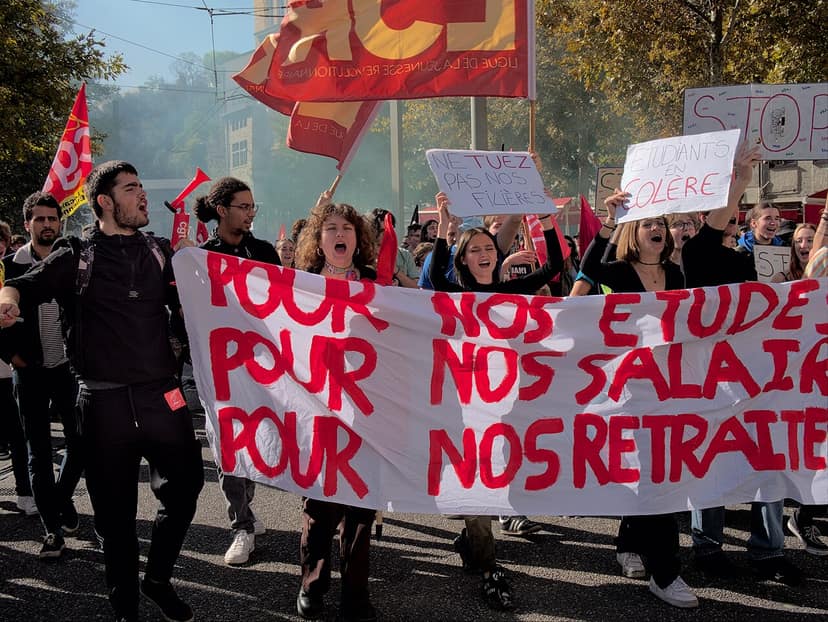

While students continue to rally for improved conditions, French Prime Minister Emmanuel Macron has called for calm amid the escalating situation and has urged for a return to dialogue. However, students have signaled their intentions to continue protesting until their demands are met, including better funding for education.
Law enforcement has responded to the protests with significant police presence, leading to around 2,000 arrests since the protests began. There have been instances where police and students have clashed, resulting in further injuries. Various reports indicate that school officials are monitoring the situation closely as frustration among students grows over what they view as inadequate support from the government regarding their educational needs.
As the movement evolves, students have maintained their stance on the issues at hand, indicating that they do not intend to relent until substantial changes are made to address the challenges in their schooling. The protests reflect a broader discontent with the state of high school education in France, prompting urgent discussions among educational authorities. Responses continue to vary, with some institutions switching to e-learning to cope with the disruptions.