World
Warmer June and July lead to records in Western Europe
June and July 2023 were the hottest on record in Western Europe, with an average temperature of 21.62 degrees Celsius.
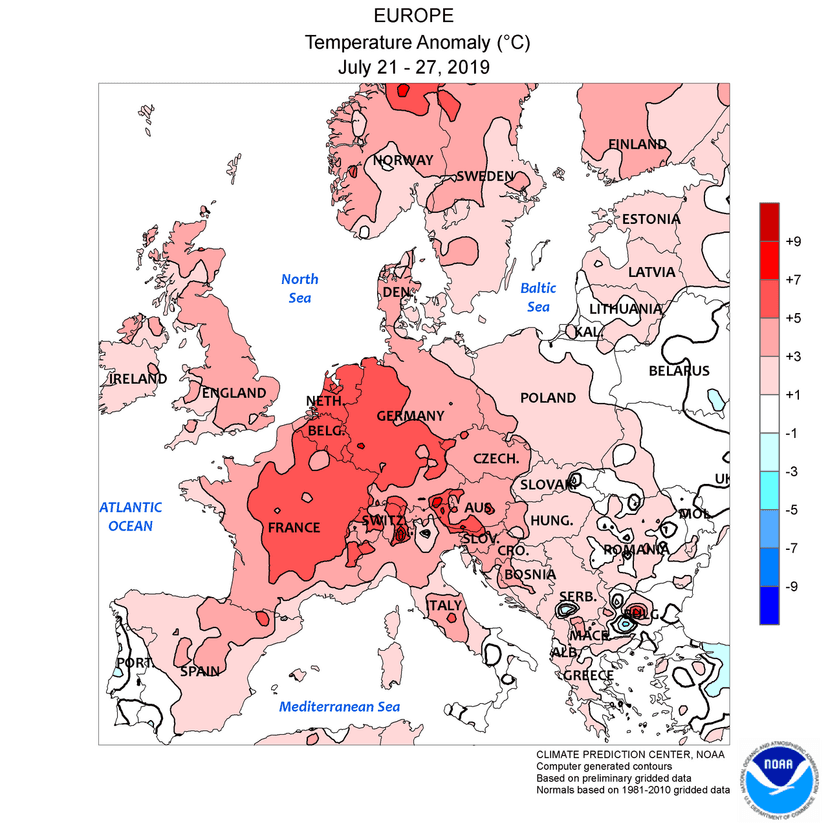

According to the Climate Change Service of the EU's Copernicus program, Western Europe experienced its highest average temperature ever recorded for June and July in 2023. This reached 21.62 degrees Celsius, surpassing the previous record set in 2022 by 2.79 degrees. This data sheds light on the current climatic changes in the region.
The last two months saw several heatwaves, which significantly raised not only air temperatures but also sea temperatures. In particular, the oceans reached new highs during this period, considerably contributing to the ongoing drought alongside rising air temperatures.
Western Europe experienced repeated heatwaves during June and July, with a total of four heatwaves recorded since May. These extreme temperatures have impacted not only the environment but also the water levels in rivers and other bodies of water, which have been noted to be unusually low.
The extreme heat has also affected agriculture and water supply. Drought conditions have led to some crops needing to be harvested earlier than usual as plants struggled under the unusual climatic conditions. This resulted in the harvest being delayed in some areas to meet the climatic challenges.
In addition to the ecological consequences, social aspects are also affected: the extreme heat increases the risk of health problems. Particularly vulnerable are older individuals, who face a higher risk of serious health issues due to the heat. These trends highlight the necessity for preventive measures and better preparedness for future heatwaves.
The reported data highlight the temperature gradient within Europe, with particularly high values in the southwest of the region. Copernicus emphasizes that these record-breaking temperatures provide significant evidence of ongoing climatic changes. The combination of increased heatwaves, drought, and rising sea temperatures plays a crucial role in the climatic developments of the coming years.