World
2026 Nobel Prize in Chemistry awarded to Henri Kagan and Kenso Soai
The 2026 Nobel Prize in Chemistry has been awarded to French scientist Henri Kagan and Japanese scientist Kenso Soai for their discoveries regarding chemical enantiomers.


The 2026 Nobel Prize in Chemistry has been awarded to Henri Kagan, a French chemist, and Kenso Soai, a Japanese chemist. This announcement was confirmed by the Royal Swedish Academy of Sciences in Stockholm. Kagan, born in 1930, and Soai, born in 1947, are honored for their contributions to the development of non-linear effects and autocatalysis in asymmetric organic synthesis.
Their research has led to an understanding of how chemical reactions can be directed to produce specific mirror-image forms of molecules. This is significant for the development of pharmaceuticals and other applications in chemistry. The discoveries of Kagan and Soai have been indicated as crucial to the way medicines are produced, with the correct steering of chemical reactions being essential.
The Nobel laureates have contributed to the fundamental principles of organic chemistry and have implications for various fields, from pharmaceuticals to flavorings. Their discovery of chiral molecules also has implications for fundamental questions such as the origin of life.
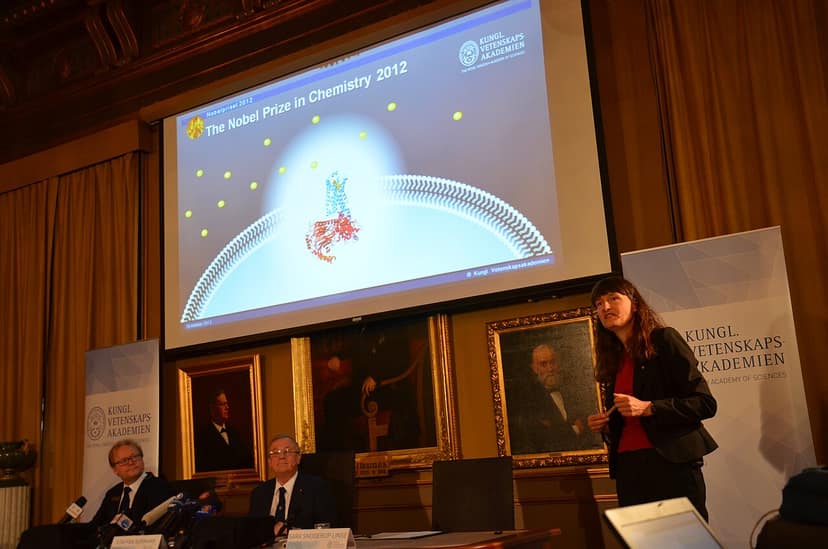

In addition to the recognition, both scientists will receive a prize of just over 1 million euros, shared between them. This is a customary arrangement for Nobel Prize winners. The award is given for research that is not only theoretically significant but also has practical applications.
The concept of chemical enantiomers involves certain molecules existing in two forms that are mirror images of each other, similar to left and right hands. Such differences can have profound implications for the functioning of chemical substances in biological and chemical processes, making the research of Kagan and Soai particularly valuable.
Science speaks of a significant advancement in chemical synthesis, where the methods developed by Kagan and Soai not only lay the foundation for future discoveries but may also have a direct impact on industries reliant on chemistry. The research demonstrates how detailed insight into molecular interactions can lead to improvements in health protection and the development of new products.