World
2026 Nobel Prize in Physics awarded to Francis Halzen for neutrino research
The 2026 Nobel Prize in Physics has been awarded to Belgian-American researcher Francis Halzen for his significant contributions to neutrino research and the IceCube observatory.


The Royal Swedish Academy of Sciences awarded the 2026 Nobel Prize in Physics to Francis Halzen on Tuesday. Halzen, a researcher in the field of particle physics, is recognized for his crucial contributions to the IceCube Neutrino Observatory, which is located beneath the ice of Antarctica.
Halzen received the award for the discovery of high-energy neutrinos originating from astrophysical sources. These neutrinos are known as ghostly particles because they can pass through matter almost without interaction, making their detection particularly challenging.
The research conducted at the IceCube Observatory, for which Halzen is recognized, is based on the principle of using large volumes of ice as a detector for these elusive particles. Researchers in this project have successfully gathered evidence for neutrinos coming from outer space, thereby opening a new frontier in astrophysics.
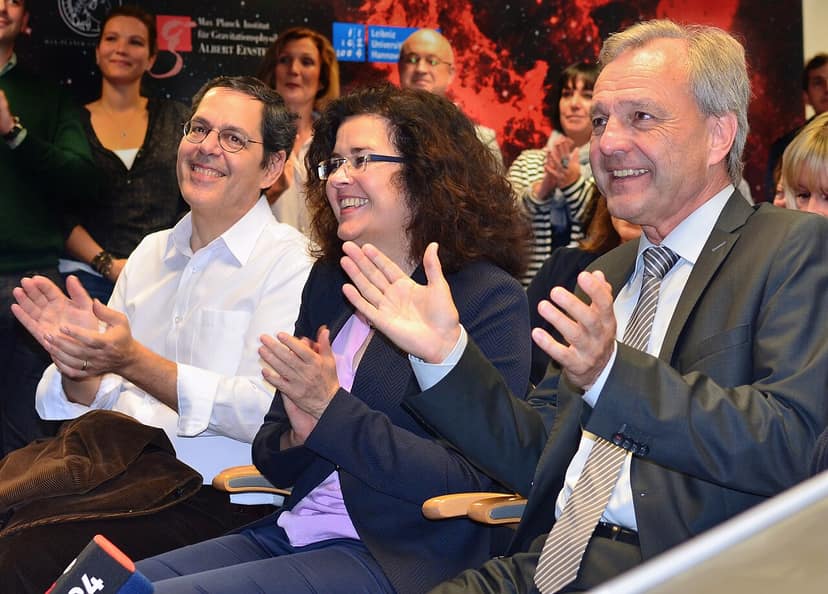

Francis Halzen, who works at the University of Wisconsin-Madison, has had a significant impact on the development of neutrino physics. He has not only contributed to the creation of the IceCube Observatory but has also helped shape the scientific foundations for neutrino detection.
This year, the Nobel Prize in Physics is worth twelve million Swedish kronor, approximately 1.1 million euros. Halzen is thus the second laureate of this Nobel Prize season, which recently began with the awarding of the Nobel Prize in Medicine.
The announcement of the prize draws global attention to neutrino research, which is considered key to understanding many astrophysical phenomena due to their properties. The recognition by the Nobel committee highlights the advancements in neutrino physics and its significance for modern science.