Domestic
Elections in Bosnia and Herzegovina: Parliamentary and Presidential Elections Begin
Voting for the national parliament, state presidency, and regional governments commenced in Bosnia and Herzegovina on Sunday.
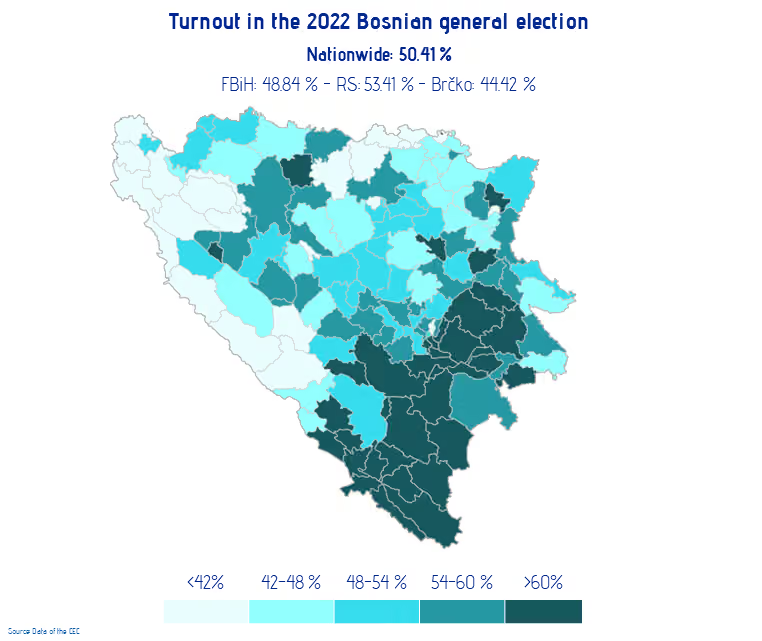

Elections began early Sunday in Bosnia and Herzegovina, with citizens called to vote for the national parliament, the three-member state presidency, and regional governments.
According to reports, around 3.4 million eligible voters are able to cast their ballots. This year's elections will feature a new biometric identification process aimed at making manipulation more difficult.
The election processes in Bosnia and Herzegovina have historically been marked by numerous challenges. In the past, several elections have been marred by allegations of electoral fraud.

As reported, the election legislation currently in force is considered controversial. The current High Representative, Christian Schmidt, has criticized the legislative foundation laid by his predecessor and pointed to the political uncertainty it has created.
The political landscape in Bosnia and Herzegovina is heavily influenced by ethnic divisions. The country is divided into a Serbian and a Croat-Muslim entity, complicating the political process.
Despite the challenges, voter turnout varies across different ethnic groups, with many young people losing faith in the elections due to corruption and nepotism. It remains to be seen what impact these elections will have on the country's political stability.