Sport
Prime Minister addresses European Parliament on budget and housing
Montenegro advocates for an increase in the European budget and discusses housing support in a speech at the European Parliament.

The Prime Minister of Portugal, Montenegro, spoke today at the European Parliament, where he emphasized the need for an increase in the European budget, alongside maintaining support for the Azores and Madeira. During his speech, Montenegro also addressed the issue of housing, highlighting the importance of European Union support for this sector.
In his speech, Montenegro stated that Portugal does not intend to enter into a dynamic of "begging" for community funds. The Prime Minister referred to a warning directed at frugal countries, mentioning that receiving 10 out of 100 is considerably more advantageous than receiving 50 out of 1000, in defense of financial cohesion among member states.
Montenegro took the opportunity to present the work carried out by his government in Portugal, stressing the need for greater engagement from the EU in defending cohesion, especially during times of economic crisis. The Prime Minister expressed the intention that available funds be used to benefit both the more developed regions and those requiring more significant support.
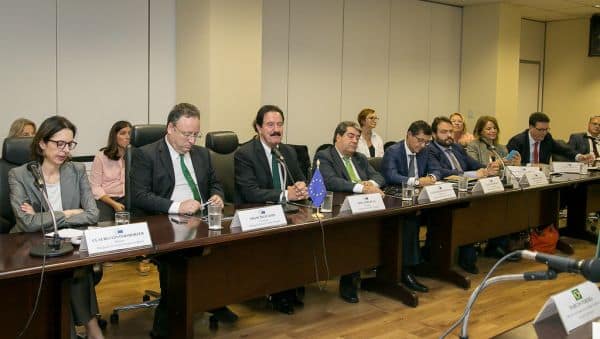
In addition to discussing the budget, his remarks included a reference to the impact of European Union support on housing, a topic that has become increasingly concerning in the country. The Prime Minister argued that housing should be a priority in European budget discussions.
Montenegro also issued a warning regarding the Budget, directed at Carneiro, without providing further details but insinuating that future budget negotiations must take Portugal's needs into account.
Today's speech at the European Parliament was seen as an opportunity to reaffirm Portugal's position regarding European Union financing and national priorities, at a time when member states are debating budget cuts. Montenegro reaffirmed the need for a balanced approach that considers the diversity of regional needs.